
The Catholic Church’s social teaching, the doctrine of living in society with others, took its modern form when Pope Leo XIII addressed the unjust social conditions of the industrial revolution at the end of the 19th century. Subsequent popes have contributed to developing the social teaching and applying it to new issues. Catholic social teaching can be structured around four basic principles, although these are not the only ones:
- Human dignity
- Subsidiarity
- Solidarity
- The common good
The principle of the common good (bonum commune) or the “general welfare” dates back to antiquity. St. Thomas Aquinas (1225–1274) developed the idea, and it is central to modern Catholic social teaching.
The Second Vatican Council defines the common good as “the sum total of social conditions which allow people, either as groups or as individuals, to reach their fulfillment more fully and more easily” (Catechism of the Catholic Church, 1906).

― The common good is a good unto itself, but also a good of human persons. If one confuses the common good with the immediate interest of the state or the “public interest,” the focus on human persons is lost. State action that violates moral principles, undermines the common good.
So says Gregory Reichberg, researcher at the Peace Research Institute Oslo (PRIO) and member of the Pontifical Academy of Social Sciences. He adds that the Catholic philosopher Jacques Maritain, in his 1947 book The Person and the Common Good, helped clarify the concept of the common good.
The Catechism on the common good
“The common good consists of three essential elements: respect for and promotion of the fundamental rights of the person; prosperity, or the development of the spiritual and temporal goods of society; the peace and security of the group and of its members.” (Catechism of the Catholic Church, 1925)
Material and spiritual goods

In the famous social encyclical Rerum novarum from 1891, Pope Leo XIII writes that “the chief good that society can possess is virtue.” He also points out that “it is the business of a well-constituted body politic to see to the provision of those material and external helps the use of which is necessary to virtuous action” (34).
In Pope Leo’s time, the Church had been criticized for being concerned exclusively with people’s spiritual welfare and their ultimate destiny.
― He wanted to emphasize that physical needs are a part of human life and that the Church has a stake in this area. On the other hand, the common good also includes spiritual goods: the life of the mind, engagement with other people, engagement with culture and morality, says Greg.
― How would you describe the relationship between the material and spiritual aspects of the common good?
― Material goods are only good if we make good moral use of them. If you don’t possess virtue, wealth will undermine your spiritual well-being. It will be to your detriment. Within the common good there is a priority of what’s spiritual, including moral values, because that is what enables us to make good use of material goods.
Civil society exists for the common good, and hence is concerned with the interests of all in general, albeit with individual interests also in their due place and degree. It is therefore called a public society, because by its agency, as St. Thomas of Aquinas says, “Men establish relations in common with one another in the setting up of a commonwealth.”
The role of the state
According to Leo XIII, the state can contribute to the common good by making sure that “the laws and institutions, the general character and administration of the commonwealth, shall be such as of themselves to realize public well-being and private prosperity” (32). Those in the state who “make the laws or administer justice, or whose advice and authority govern the nation in times of peace, and defend it in war ... should be held in highest estimation, for their work concerns most nearly and effectively the general interests of the community” (34).
― In what ways does Catholic social teaching think the state should contribute to the common good?
― Here we must distinguish between state and political society. The state is the governing part of a political society, so the state exists for the sake of this society. The state serves the common good, it does not establish it. The laws should recognize the core parts of the common good.

Greg says that Pope Leo is right in recognizing a hierarchy of state functions, where some take precedence over others.
― Not all aspects of governance are equally central to the common good. Modern states function in accordance with a body of laws that recognize fundamental rights. The provision of proper defense is also very important. Under that I would include the maintenance of civil order and efforts to keep crime in check. It is important to redress wrongdoing in ways that are consistent with the common good.
Greg refers to Thomas Aquinas, who writes about social virtues in addition to individual virtues. Some of them apply to political leadership, others to citizens.
― One of them is military prudence, because Aquinas says that military governance is directly related to the common good. He contrasts this with the activity of businesspeople. They primarily look to their private good, what benefits them.

The universal destination of goods
Catholic social teaching defends the right to private property but emphasizes that the right has certain limitations as a result of the “universal destination of goods,” i.e. that “God entrusted the earth and its resources to the common stewardship of mankind” (Catechism of the Catholic Church, 2402). This entails that one’s own property should also benefit others.
God has granted the earth to mankind in general, not in the sense that all without distinction can deal with it as they like, but rather that no part of it was assigned to any one in particular, and that the limits of private possession have been left to be fixed by man's own industry, and by the laws of individual races.
Since ownership is a good, Leo XIII teaches that the state “should favor ownership, and its policy should be to induce as many as possible of the people to become owners” (46). But he clarifies that “neither justice nor the common good allows any individual to seize upon that which belongs to another, or, under the futile and shallow pretext of equality, to lay violent hands on other people’s possessions” (38).
― If “the principle of the common use of goods” is “the first principle of the whole ... social order” (John Paul II, Laborem exercens, 19), why does the Church reject attempts to abolish private property?
― Thomas Aquinas discusses private property in the context of the virtue of justice. His view is that when God created the universe, he established a hierarchy. Physical things were created for the sake of spiritual creatures, particularly human beings. This is the source of the universal destination of goods. The question is: How are we best to make use of the goods that are made for us?
The Catechism on private property
“The right to private property, acquired by work or received from others by inheritance or gift, does not do away with the original gift of the earth to the whole of mankind. the universal destination of goods remains primordial, even if the promotion of the common good requires respect for the right to private property and its exercise.” (Catechism of the Catholic Church, 2403)
Labor and ownership
Greg points out that many of the material goods we need were not given to us ready-made. They must be transformed by human labor, and “when man thus turns the activity of his mind and the strength of his body toward procuring the fruits of nature, by such act he makes his own that portion of nature’s field which he cultivates” (Leo XIII, Rerum novarum, 9).
― People work most effectively when they have some control over the material goods they use to carry out their work. This leads to the idea that private ownership of goods is beneficial to human labor. It is not a claim that labor cannot take place without private ownership, but that this is the best way for it, says Greg.
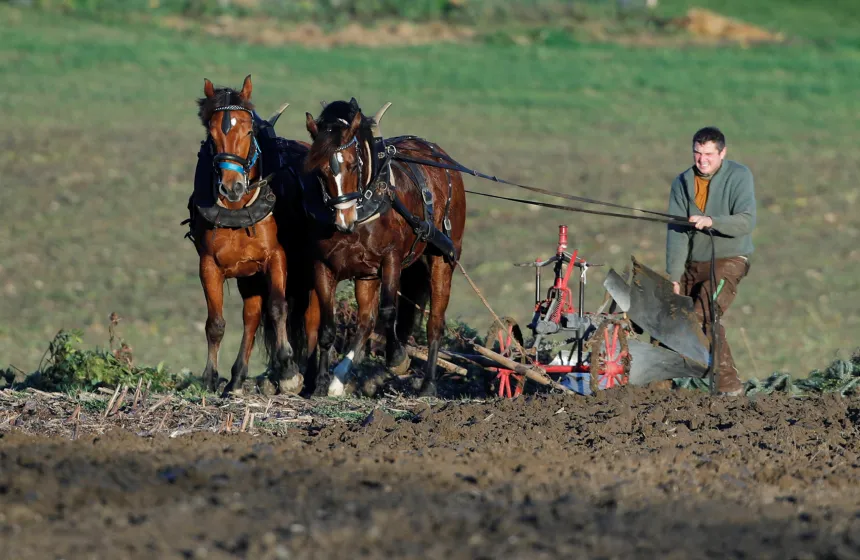
Greg reminds us that the goods of the earth are created for all people, and that everyone should share in them. This means that when we use privately owned goods, their use must take into account the common good. The popes also warn against allowing wealth to be concentrated in the hands of a few.
― This should not be legislated in all cases, because there can be many undesirable consequences of over-legislating. On the other hand, there is something wrong with a political system and law that allows enormous inequalities in society. The state might not want to step in and tell people how to spend their money, but it can take measures to prevent that gulf from growing too large. That is going to undermine the common good.
We do not need a State which regulates and controls everything, but a State which, in accordance with the principle of subsidiarity, generously acknowledges and supports initiatives arising from the different social forces and combines spontaneity with closeness to those in need.
Freedom and moral order

In the encyclical Pacem in terris from 1963, Pope John XIII writes that “the common good is something which affects the needs of the whole man, body and soul. That, then, is the sort of good which rulers of States must take suitable measure to ensure [and] respect the hierarchy of values” (57).
The Pope writes that human rights must be protected, but that they cannot be separated from the moral order of which they are a part. Human beings have “a right to freedom in investigating the truth, and—within the limits of the moral order and the common good—to freedom of speech and publication” (12).
― Is there a tension or potential conflict between certain freedoms and the “moral order” as part of the common good?
― Thomas Aquinas has a great phrase: The law (human law) should not command the exercise of all virtues, nor should it prohibit the exercise of all vices. So some restraint should be shown. I would say that only the most egregious expressions of thought should be legally restrained, incitement to violence and the like.
The natural rights of which We have so far been speaking are inextricably bound up with as many duties, all applying to one and the same person. These rights and duties derive their origin, their sustenance, and their indestructibility from the natural law, which in conferring the one imposes the other.
Until the 20th century, there was an acceptance of censorship in Catholic teaching and practice. St. Thomas Aquinas, for example, believed that it should not be lawful to promote heresy in the public square.

― Even today, there are some forms of speech that are considered to cross the line. The exchange of thought is an essential part of the common good, but sometimes it leads to errors and divisions in society, says Greg.
― There are pernicious ideas and expressions, and that needs to be recognized. However, care needs to be exercised in where to draw the legal line. Generally speaking, it is not the role of the state to differentiate between truth and falsehood.
Greg refers to the 1953 book The Captive Mind by Czesław Miłosz, who had an official role in the communist government in Poland, but who realized how harmful the control of speech and thought was—how it undermines the common good.
The global common good
Pope John also expands the common good from “the common good of the State” to include “the common good of the entire human family” (98). He continues: “Today the universal common good presents us with problems which are world-wide in their dimensions; problems, therefore, which cannot be solved except by a public authority with ... a world-wide sphere of activity” (137).
― How is a “general authority equipped with world-wide power and adequate means for achieving the universal common good” (138) in line with Catholic social teaching?
― The idea that the common good transcends individual political societies is very old. Thomas Aquinas talks about the “common good of the whole universe.” At the same time, he equates the “perfect” or complete community in the temporal sphere with the res publica, on the level of a city or a kingdom. The perfect society in the spiritual sphere is the Church, which culminates in the communion of saints in heaven.
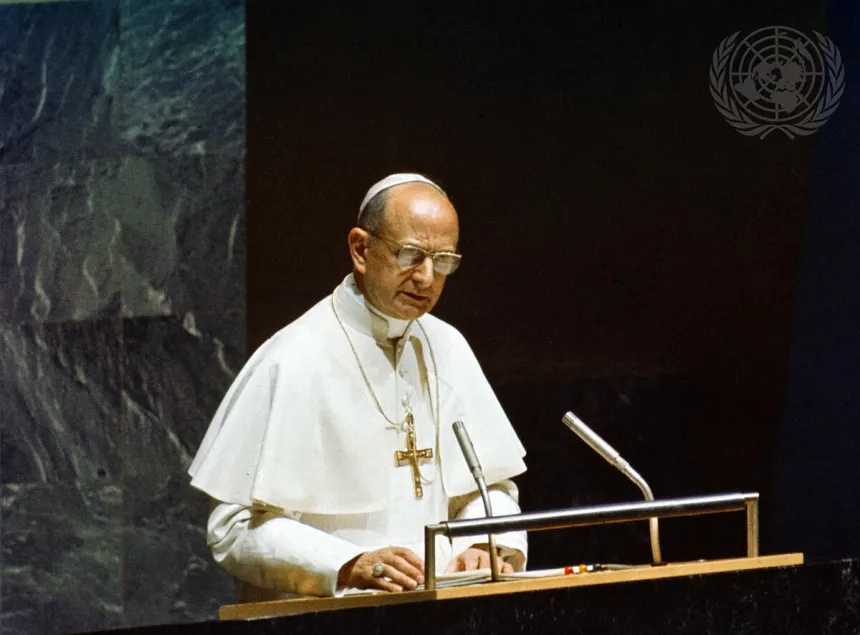
A perfect society (societas perfecta) in either the temporal or spiritual sphere is, according to Greg, a society in which all activities that are part of the common good can be carried out. He notes that even in the Middle Ages there was an idea that the common good had a broader horizon than individual states.
― When Aquinas talks about war, he says that it is one of several “sins against peace.” Sedition is a sin against peace in individual societies, and schism is a sin against peace in the Church. Since war is a sin against peace between states, it implies a wider community of peoples or nations.
Gregory Reichberg explores this topic in more depth in his book Thomas Aquinas on War and Peace (Cambridge University Press, 2017).
[I]t is no part of the duty of universal authority to limit the sphere of action of the public authority of individual States, or to arrogate any of their functions to itself. On the contrary, its essential purpose is to create world conditions in which the public authorities of each nation, its citizens and intermediate groups, can carry out their tasks, fullfill their duties and claim their rights with greater security.
Shared by all
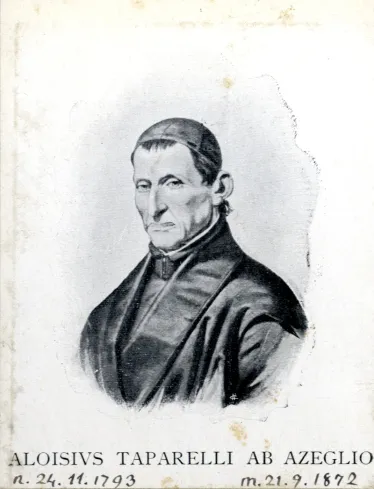
The Italian philosopher Luigi Taparelli (1793–1862), who laid the foundations for modern Catholic social teaching, developed the idea that the perfect society is achieved at a higher level than the individual state.
He argued that there is a community of peoples and that, ideally, there should be an authority and a legal system to regulate this community—just as there is an authority and a legal system for each individual society.
― The UN (United Nations) was established to deal with issues that transcend the borders of individual countries. Among other things, there are treaties to deal with “commons” such as the oceans, Antarctica and outer space, which are shared by all.
Greg emphasizes that the principle of subsidiarity still applies:
― The people who best understand what needs to be done are those on the ground who are closest to the issue. But there are issues that regard us all, at progressively higher levels, and those kinds of decisions need to be made at that higher level.
Goods on the market
In his 2009 encyclical Caritas in veritate, Pope Benedict XVI writes: “Profit is useful if it serves as a means towards an end,” but: “Once profit becomes the exclusive goal, if it is produced by improper means and without the common good as its ultimate end, it risks destroying wealth and creating poverty” (21).
The Pope emphasizes that economic activity in the market, which “cannot solve all social problems,” should nevertheless be “directed towards the pursuit of the common good, for which the political community in particular must also take responsibility” (36).

― In what ways can the market contribute to the common good, and in what ways can it work against the common good?
― Many of the papal encyclicals talk about how the economic sphere can become detached from labor and devoted solely to capital. Thus, the accumulation of capital becomes an end in itself. That is a vision of the market that is detrimental to the common good. Catholic thinkers, leaning on the popes, further emphasize that the market should not be detached from ethics.
It must be remembered that the market does not exist in the pure state. It is shaped by the cultural configurations which define it and give it direction. Economy and finance, as instruments, can be used badly when those at the helm are motivated by purely selfish ends. Instruments that are good in themselves can thereby be transformed into harmful ones.
Greg points to concerns expressed by many that AI (artificial intelligence) will replace humans in various fields. The result could be enormous wealth for a few, and a large number of people who have lost their ability to work. In the worst case, this could lead to great misery and social unrest.
― On the other hand, the market is an arena where people can find ways to contribute to the common good. I’m a photography buff, and I’m happy there are companies that make good cameras. As a philosopher, I’m happy there are publishers who produce books. Not to mention our basic needs, such as food. The danger is that money becomes an end in itself, that one forgets that the market is a means to serve the goods we need.
The Catechism on economic life
“Economic life is not meant solely to multiply goods produced and increase profit or power; it is ordered first of all to the service of persons, of the whole man, and of the entire human community. Economic activity, conducted according to its own proper methods, is to be exercised within the limits of the moral order, in keeping with social justice so as to correspond to God’s plan for man.” (The Catechism of the Catholic Church, 2426)
The climate as a common good
In his 2015 encyclical Laudato si’, Pope Francis writes that change should be “geared to the common good” (18). He views the climate as a “common good” in itself, because it is “linked to many of the essential conditions for human life” (23). Therefore, he warns against the threat to the climate by global warming.
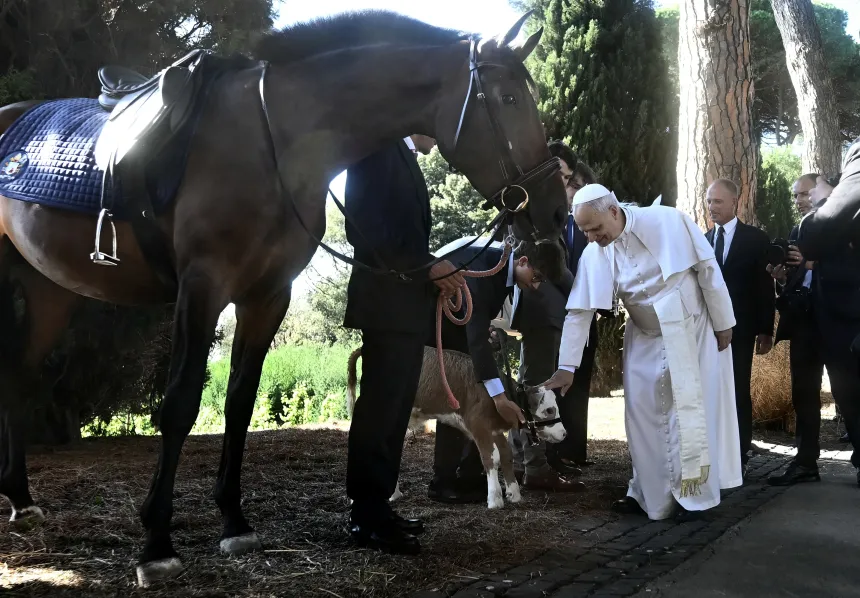
The Pope adds: “The notion of the common good also extends to future generations” (159). Concerning climate change, we must ask ourselves: “What kind of world do we want to leave to those who come after us, to children who are now growing up?” (160).
― What does it mean for us that the climate is part of the common good, and that this good also belongs to future generations?
― Human beings have a superior position in relation to the rest of nature, which is not in itself a bad thing, but over time we have found new ways of impacting the world we live in. Nature is the foundation of our shared life, and we need to nurture and protect it. This is especially true now that we realize that we are not only recipients of its goods, but that we also have an impact on nature itself.
Politics and the economy tend to blame each other when it comes to poverty and environmental degradation. It is to be hoped that they can acknowledge their own mistakes and find forms of interaction directed to the common good.
Greg points out that human ingenuity throughout history has meant that parts of our world that we thought were fixed and unchangeable—where God “makes his sun rise on the bad and the good, and causes rain to fall on the just and the unjust” (Matt. 5:45)—are suddenly, due to human action, not as fixed and unchangeable as we thought.

― No one would have thought a thousand years ago that we could affect the air and ocean currents. I think future generations are very relevant. It is a part of being a parent that you want to assure some stability for your children and their children.
It is possible to go too far in one’s concern, however:
― Some people can get quite extreme and say that people need to stop having children because it will ruin the earth, but we cannot predict all the complex causal relationships in the future. We need to show some humility and moderation.
Read more


